The capital gains tax overhaul is now law: What it means for your assets
The most significant change to Australia's capital gains tax system in more than 25 years is now law. The Treasury Laws Amendment (Tax Reform No. 1) Act 2026 (Acts No. 49 and 50 of 2026) received royal assent on 26 June 2026. From 1 July 2027, the 50% capital gains tax discount for individuals, trusts and partnerships is abolished. In its place is a new framework built on Consumer Price Index cost base indexation and a 30% minimum tax on real capital gains.
The changes passed the Senate on 25 June 2026 with 33 amendments from when the bills were first introduced. Several of those amendments are material and changed the final law in important ways. This article explains what the law actually says, what the transitional protections mean in practice, and what you should be thinking about now.
What replaces the 50% discount from 1 July 2027?
For capital gains tax events occurring on or after 1 July 2027, two mechanisms replace the 50% discount for assets held at least 12 months:
- Consumer Price Index indexation: The cost base of the asset is adjusted upward by the change in the Consumer Price Index from the date of acquisition to the date of disposal. This removes purely inflationary gains from the calculation, so that only real economic growth is taxed.
- 30% minimum tax: A minimum tax rate of 30% applies to the net capital gain remaining after indexation. This means that even where a taxpayer's marginal rate is lower than 30% (for example, a beneficiary receiving a trust distribution), the effective tax rate on the gain cannot fall below 30%.
These changes apply to individuals, trusts and partnerships. Companies are not affected – the capital gains tax discount has never applied to companies, which pay tax on capital gains at their applicable corporate rate.
Complying superannuation funds retain their existing one-third capital gains tax discount treatment for directly held assets.

The transitional protection for assets already held
One of the most important features of the legislation is the transitional protection for assets held at 1 July 2027.
The law introduces a notional deemed sale mechanism that works as follows:
- Every capital gains tax asset held at the close of 30 June 2027 is treated as having been notionally sold and reacquired at market value on that date.
- The gain accrued up to that point (the pre-1 July 2027 gain) is calculated under the old rules, including the full 50% discount for assets held more than 12 months. This portion of the gain is deferred and crystallised only when the asset is actually sold.
- Growth in the value of the asset from 1 July 2027 onwards is taxed under the new indexation and 30% minimum tax framework.
This means you do not need to sell assets before 1 July 2027 to preserve the 50% discount on gains already accrued. The deemed sale mechanism locks in those gains under the old rules automatically. You will need to establish the market value of your assets at 30 June 2027, either through a formal valuation or, for listed securities, by reference to the closing price on that date.
New residential builds – a choice between regimes
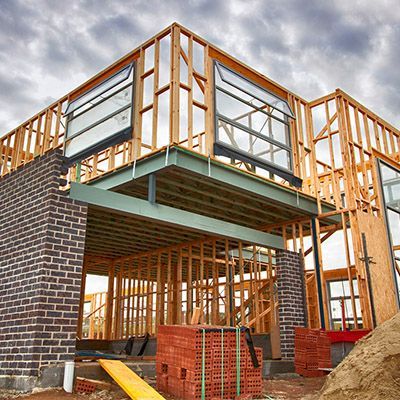
Investing in new residential dwellings is the only asset category that retains access to the 50% discount under the new law, as a matter of taxpayer choice. Where a gain relates to a new residential dwelling, the taxpayer can elect either the 50% discount or the new indexation regime – whichever produces the better outcome.
A new residential dwelling is defined as a dwelling constructed on previously vacant land, or where existing structures are demolished and replaced with a greater number of dwellings than previously existed. Like-for-like knock-down rebuilds do not qualify. The new-build benefit applies to the first investor purchaser only.
Senate amendments that changed the final law
The legislation passed with 33 Senate amendments. The most significant include:
- Ministerial power removed: The original bill included a power allowing the Minister to declare additional asset classes eligible to retain the 50% discount. That power was removed by the Senate. The only asset class with an ongoing choice between regimes is new residential dwellings.
- Small business active asset reduction threshold raised: The 50% active asset reduction under the small business capital gains tax concessions (Subdivision 152-C) previously had an aggregated turnover threshold of $2 million. The Senate raised this to $10 million, effective from the income year that includes 1 July 2027 onwards. This significantly expands the number of businesses able to access the concession.
- Income support exemption limited to the disposal year: Age Pension and JobSeeker recipients who realise a capital gain are exempt from the 30% minimum tax in the year of disposal only. The Senate confirmed this exemption does not carry forward to future years.
What has NOT changed
Several important concessions remain fully intact and are not affected by the 2027 reforms:
- The main residence exemption: The family home is fully protected from capital gains tax and is unaffected by the new rules.
- The small business capital gains tax concessions under Division 152: The 15-year exemption, 50% active asset reduction (now with the higher $10 million threshold), retirement exemption and rollover are all retained.
- The 60% capital gains tax discount for qualifying affordable housing investments is retained.
- Assets held in complying superannuation funds, including self-managed superannuation funds, retain their existing one-third discount treatment.
Planning considerations before 1 July 2027
The transitional deemed sale mechanism means that existing gains are protected, but the split calculation will require a market valuation of your assets at 30 June 2027. For investment portfolios of any size, the timing of asset disposals in the 2026-27 financial year and beyond is worth thinking through carefully. If you would like to discuss how the changes affect your specific situation, please feel free to get in touch.
Please contact us if you have any questions - email us or phone our team on 02 9899 3044.